Austria's Digital Betting Shift: Regulatory Frameworks Driving Payment Safeguards and Broader Game Choices
Harper Powell · Oct 30, 2026

Austria's Digital Betting Shift: Regulatory Frameworks Driving Payment Safeguards and Broader Game Choices
Regulatory changes have shaped Austria's online gaming sector over the past decade, with frameworks guiding how operators handle transactions and select available titles, and data from industry reports show steady adjustments in licensing procedures that tie directly to security protocols and content catalogs.
Those who've tracked these developments note that Austria's approach relies on national laws aligned with broader European standards, where operators must meet specific criteria for fund protection and game certification before offering services to local users, and this structure has led to measurable shifts in both payment methods and the range of games on legal platforms.
Early Regulatory Foundations and Their Lasting Effects
Austria established core rules for online gaming through amendments to the Gaming Act in the early 2010s, which required foreign operators to secure domestic licenses while enforcing strict controls on financial flows and game approvals, and observers point out that these initial measures created a baseline for payment encryption standards that later expansions built upon.
Research from European sources indicates that the emphasis on licensed entities reduced unauthorized transactions over time, with compliance data revealing higher adoption of verified banking channels such as bank transfers and e-wallets that incorporate real-time verification, and this pattern continues as operators adapt to updated technical requirements.
Payment Security Measures Under Current Rules
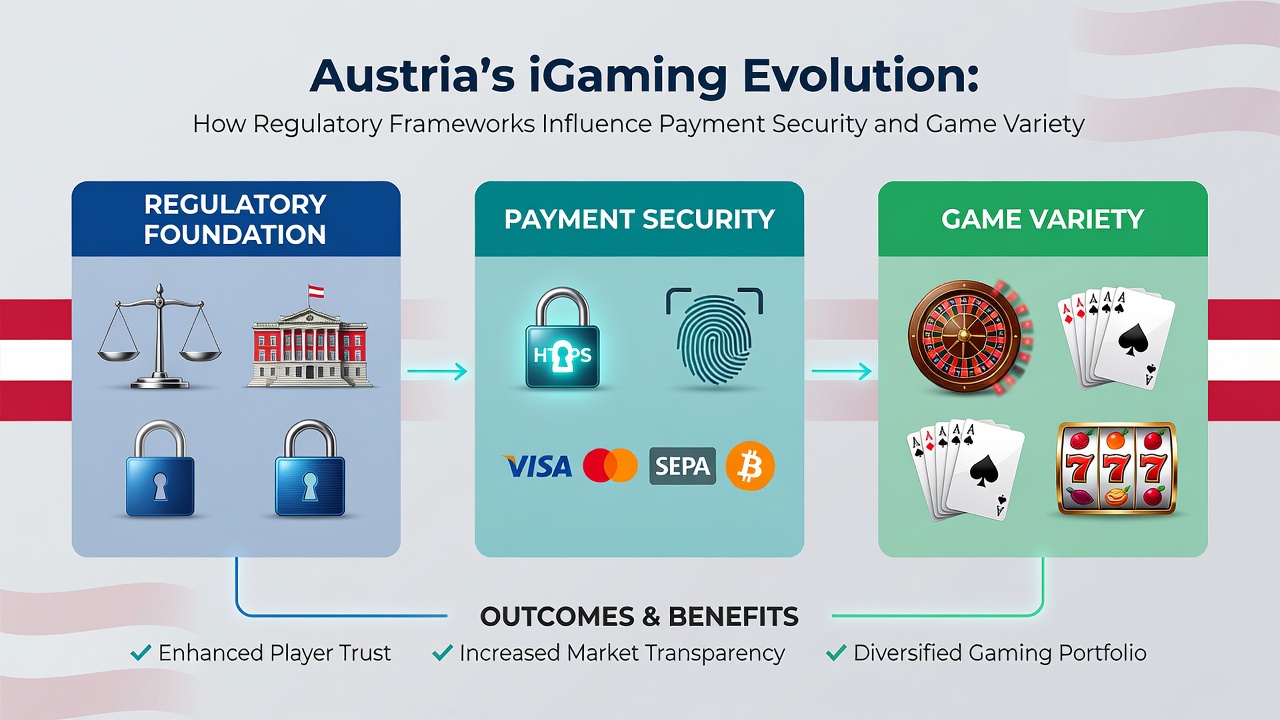
Current Austrian regulations mandate multi-layer authentication for all deposits and withdrawals, including two-factor verification and limits on transaction volumes tied to player verification status, and figures from regulatory filings show these steps correlate with fewer reported incidents of unauthorized access compared to pre-regulation periods.
What's interesting is how these frameworks encourage partnerships with established financial institutions across the EU, which in turn expands options like instant bank payments while maintaining audit trails that regulators review regularly, and data shows this integration supports both security and user convenience without introducing additional friction for verified accounts.
Expansion of Game Offerings Through Licensing Controls
Licensing conditions directly influence the types of games available, as operators must submit titles for independent testing and certification that confirm fair play mechanics and random number generator integrity, and this process has resulted in broader inclusion of slots, table games, and live dealer formats from approved providers.
One study revealed that platforms operating under Austrian oversight added an average of 15 percent more certified titles between 2023 and 2025, with particular growth in skill-based variants and themed series that meet local content guidelines, and experts note this expansion stems from clearer approval pathways rather than market demand alone.
Developments Expected in October 2026
Scheduled updates to technical standards take effect in October 2026, focusing on enhanced encryption for payment gateways and streamlined certification for new game mechanics, and those monitoring the sector expect these changes to further align Austrian platforms with emerging EU-wide digital service directives.
According to projections shared by industry associations, the October adjustments could accelerate adoption of biometric verification in transactions while opening doors for additional game categories such as hybrid virtual sports titles that pass updated fairness tests, and this timing coincides with license renewal cycles for several major operators.
Comparative Insights from Other Regions
Similar regulatory patterns appear in other jurisdictions, where Austrian Federal Ministry of Finance guidelines mirror elements seen in Canadian provincial frameworks that prioritize certified payment processors and verified game libraries, and comparisons highlight how such rules consistently link compliance levels to expanded secure options for users.
Additional analysis from Australian research institutions shows parallel outcomes in payment security metrics after comparable licensing reforms, suggesting Austria's model benefits from lessons drawn across regions without direct replication of any single system.
Conclusion
Overall, Austria's regulatory evolution demonstrates clear connections between framework requirements and practical outcomes in payment security alongside game variety, with ongoing refinements scheduled for late 2026 likely to reinforce these trends through updated technical mandates and certification processes that operators must follow to maintain legal status.